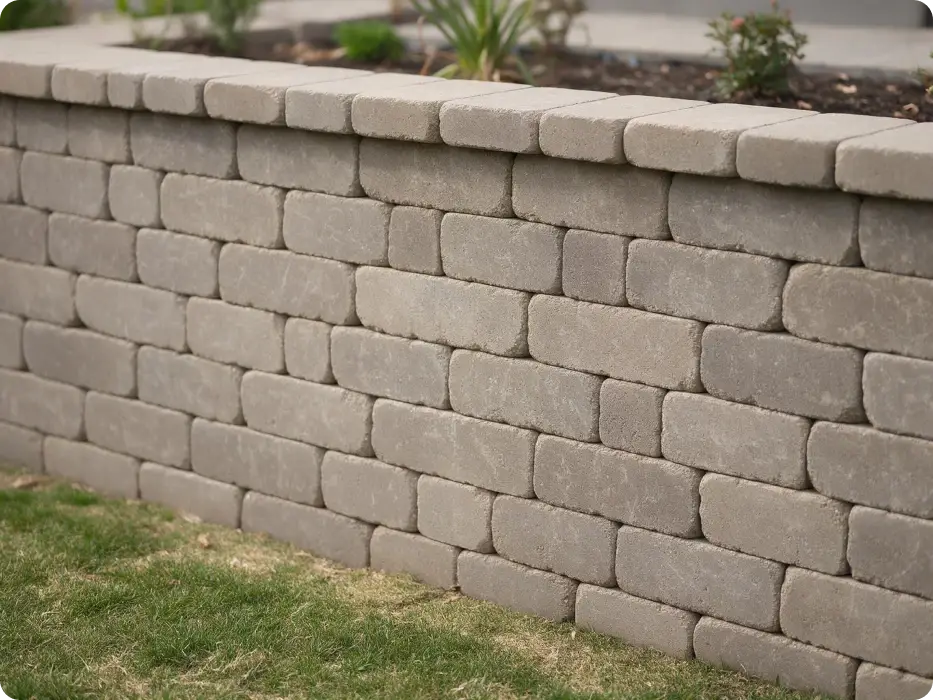
Tired of dealing with a steep slope, washed-out soil, or a section of your yard you can't use? We build retaining walls that help hold everything in place and make more of your outdoor space usable.
That steep hill you've given up on? The awkward corner where nothing grows? It might have more potential than you realize. A retaining wall can help turn those difficult areas into usable space for landscaping, garden beds, or a backyard that's easier to enjoy.
MORE USABLE SPACE
GARDEN & PLANTING BEDS
EROSION CONTROL
HOW WE BUILD RETAINING WALLS
There's more to a retaining wall than stacking blocks.
Your quote will explain the proposed work and materials, with site requirements and any further design needs clarified before construction.
UNDERSTAND THE SPACE
A site walk-through
Discuss the changes in level, existing conditions and how you’d like the surrounding yard to work.
DEFINE THE PURPOSE
Layout and material discussion
Consider the proposed wall position, available materials and how the finished space connects with the yard.
LOOK BELOW THE SURFACE
Ground and water review
Identify preparation, drainage considerations and any further assessment needed for the proposed work.
BUILD THE AGREED SCOPE
Preparation and installation
Define the excavation, base, drainage and wall components included in the project’s construction plan.
REVIEW THE FINISHED AREA
Finishing and walk-through
Review the completed work, surrounding finishes and any care or monitoring guidance for the installation.
Your retaining wall has one job. Don't let it fail.
Colorado weather can be tough on retaining walls. Between shifting soil, freezing temperatures, and water building up behind the blocks, there's a lot going on that you can't see. Getting those details right is what helps keep your wall standing for years to come.
A solid foundation helps keep everything in place.
Proper drainage helps prevent water pressure behind the wall.
The right design accounts for your slope, soil, and local requirements.
PLANNING YOUR RETAINING WALL
Let's get this wall figured out.
You know what you want to change about your yard. Figuring out how to make it happen is where we come in. We'll take a look at your property, talk through your options, and help you understand what needs to happen before the first block goes down.
Nearby buildings, fences, slopes, and property lines can affect where a retaining wall can go. We'll look at the space and talk through what's possible.
Where's the water going?
Water building up behind a retaining wall can cause serious problems. We'll discuss drainage and how equipment can access the area before work begins
Let's get the paperwork straight.
Some retaining walls require permits, engineering, or additional approvals. We'll talk through what's required for your project and who's responsible for handling it.
AREAS WE SERVE
Five communities. One local focus.
Retaining wall installation for homeowners across our Northern Colorado service area.
Fort Collins
Windsor
Loveland
Wellington
Severance
A few good questions before we dig.
Purpose, materials and project requirements. Here’s a useful starting point before your walk-through.
Cost depends on height, length, materials, access, excavation, base and drainage work. The walk-through and quote are free, and your itemized quote will show the proposed work and what is included.
Common options include segmental block, stone and other wall systems. We will discuss the available choices around appearance, budget and what makes sense for the slope and site conditions.
Often yes. By holding back a slope, a wall can create flatter areas for planting, lawn or outdoor living. The possibilities depend on the existing grade, soil and surrounding features.
Water behind a wall adds pressure and can affect stability over time, especially with freeze-thaw cycles. Drainage behind and around the wall is part of a proper plan and should be discussed before construction.
It depends on height, location and local requirements. Taller walls or walls near structures often need engineering and permits. We will flag what applies to your site and clarify responsibilities before work begins.
Ready to rethink the levels in your yard?
Tell us how you’d like to use the space. We’ll start with a free walk-through and a clear, itemized quote. No pressure to move forward.